Street food is one of the most honest ways to understand a city. No dress code, no reservations, no curated experience — just a vendor, a recipe passed down through generations, and whatever is fresh that day. For food lovers who travel specifically to eat, the question is always the same: where in the world does street food reach its highest form? The answers span continents, but a handful of cities stand out consistently for the depth, variety, and quality of what you can find on the street.
Bangkok, Thailand
Bangkok is the city that most serious food travellers name first, and the reasons are not hard to understand. The sheer density of options — from early morning rice porridge sold by vendors outside temples to midnight noodle bowls in Chinatown’s Yaowarat Road — means that eating well in Bangkok requires almost no planning beyond showing up.
According to Time Out’s global survey of over 18,500 people published in 2025, Bangkok ranked among the top food cities in the world, with respondents specifically noting that the gap between a three-dollar street meal and a fine dining experience is narrower here than almost anywhere else.
Must-try dishes include pad thai from a wok fired over charcoal rather than gas — the smoky flavour is noticeably different — and som tam, the green papaya salad that balances heat, sourness, and sweetness in proportions that vary by vendor. Jodd Fairs Night Market and the streets around Chinatown are the most reliable starting points, but the best discoveries tend to happen when you follow a crowd rather than a list.
Mexico City, Mexico
Mexico City’s street food culture is protected, in part, by UNESCO — traditional Mexican cuisine was added to its Intangible Cultural Heritage list in 2010, recognising the depth of knowledge and technique embedded in dishes that are sold for a few pesos on the street.
The taco is the obvious starting point, but the range of fillings, tortilla types, and regional variations makes it a subject worth studying rather than taking for granted. Tacos al pastor — marinated pork cooked on a vertical spit and served with pineapple and salsa — originated with Lebanese immigrants in the mid-twentieth century and became one of the most replicated street dishes in the world. Tamales, elote (grilled corn on the cob with chilli, lime, and cheese), and tlayudas from Oaxacan vendors all reward attention.
The Mercado de la Merced and Mercado Jamaica are worth a morning each, not just for the food but for the spectacle of how a city feeds itself at scale.
Istanbul, Turkey
Istanbul sits at the intersection of Europe and Asia, and its street food reflects that position — drawing on Central Asian, Middle Eastern, Mediterranean, and Balkan traditions simultaneously. The result is a city where almost every neighbourhood has its own food identity and where eating on the street is genuinely embedded in daily life rather than performed for tourists.
Simit — a sesame-crusted bread ring sold from carts at every corner — is the city’s most iconic street food, though it is modest enough that visitors often overlook it. More dramatic are the fish sandwiches sold from boats moored at the Galata Bridge, where mackerel is grilled and stuffed into bread alongside onions and greens. Midye dolma (mussels stuffed with spiced rice) and kokoreç (offal grilled over charcoal) reward the less cautious.
The Karaköy and Eminönü neighbourhoods are the densest for street food, and the Grand Bazaar’s surrounding streets offer a more local-facing experience than the bazaar itself.
Mumbai, India
Mumbai’s street food is specific to the city in a way that resists easy categorisation. Dishes that originated elsewhere in India have been adapted, compressed, and intensified to suit a population that largely eats standing up, between tasks, at all hours of the day.
Vada pav — a spiced potato fritter in a bread roll — is the city’s defining street food, simple enough that its quality depends almost entirely on the chutneys that accompany it. Pav bhaji, a thick vegetable curry served with buttered bread rolls, originated in Mumbai in the 1850s as a fast meal for textile mill workers and has since spread across the country without losing its identity as essentially a Mumbai dish. Bhel puri and sev puri — puffed rice and chickpea dishes mixed with tamarind chutney, onion, and coriander — are best eaten from the stalls on Chowpatty Beach at dusk.
New Orleans, USA
New Orleans topped Time Out’s ranking of the world’s best cities for food in 2025, with 93% of local respondents rating the city highly for eating out — the third-highest percentage of all cities surveyed globally. What makes the city unusual in a North American context is how deeply its food culture is tied to specific place and history rather than imported trend.
Beignets — deep-fried pastry squares dusted with powdered sugar — are the city’s most photographed street food, sold at Café Du Monde around the clock. More substantial are the po’boys: sandwiches filled with fried seafood or roast beef and dressed with lettuce, tomato, pickles, and mayonnaise. Crawfish étouffée and gumbo, while more often found in restaurants, appear in takeaway form throughout the French Quarter and beyond.
The French Market on Decatur Street is one of the oldest markets in the country and worth visiting for context as much as for food.
A Few Practical Notes
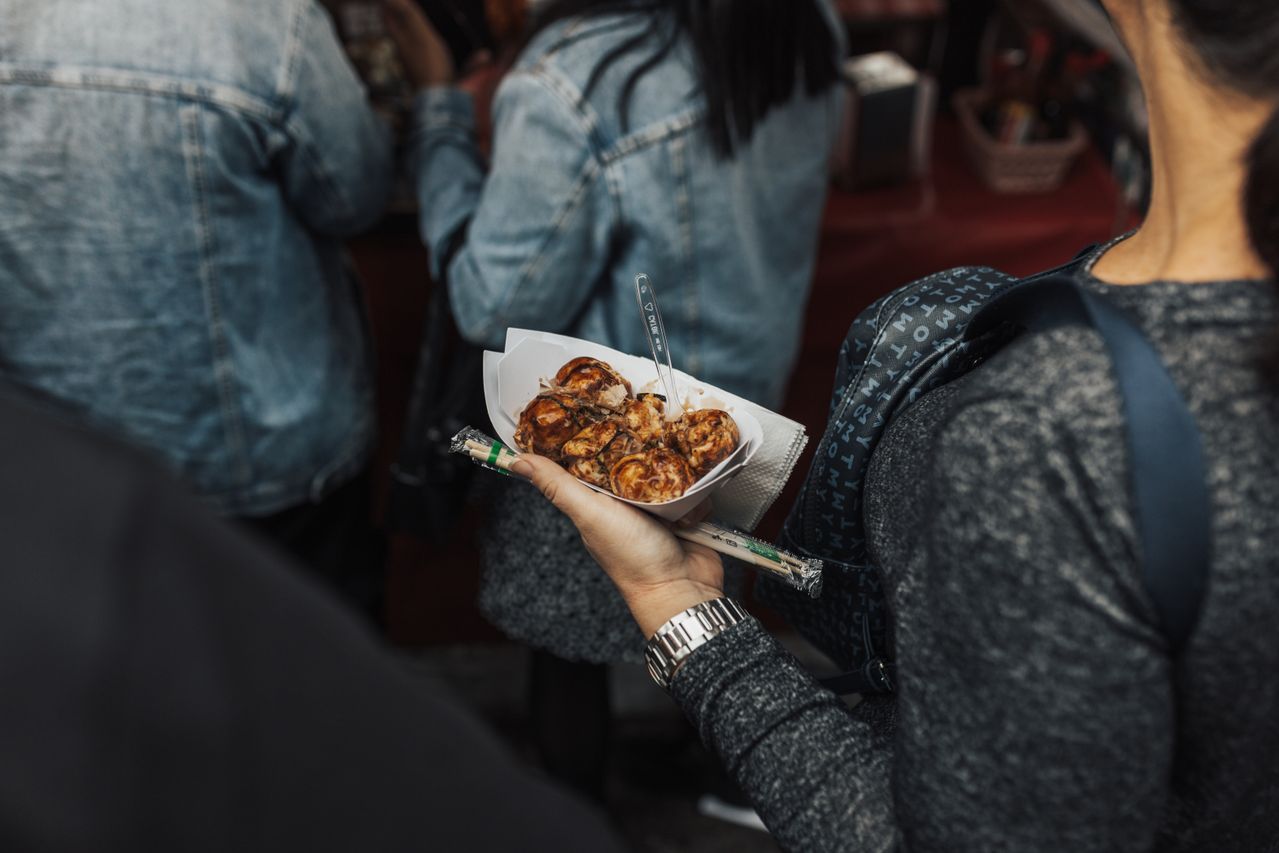
Street food quality varies within cities as much as between them. A few principles that hold across most destinations:
- Follow queues. A vendor with a line of locals at lunchtime is almost always worth waiting for.
- Eat at peak hours. Ingredients are freshest and turnover is highest when locals are actually eating — typically mid-morning and early afternoon rather than tourist mealtimes.
- Ask what’s made fresh that day. Most vendors have a speciality that they make in limited quantity; arriving early for it matters.
- Carry small bills. Many street vendors do not make change for large denominations, and the transaction is faster and friendlier with exact money.
The UNESCO Intangible Cultural Heritage list is a useful reference for understanding which food traditions have been formally recognised as culturally significant — a starting point for deciding which cities to prioritise when travel is driven primarily by food.
The Point of Street Food Travel
Eating street food in a new city is not about finding the cheapest meal or ticking a list. At its best, it is a way of spending time in a place at the level where daily life actually happens — not in a restaurant designed for visitors, but in the same queue as the office worker on a lunch break, the vendor who has been making the same dish for thirty years, and the child who grew up eating it. That kind of contact with a city is harder to plan and easier to miss than a restaurant reservation, but considerably more memorable when it happens.